
BIC 2026, and a Review One Beat Late
32
GG Vol.
26. 10. 10.
In August, with the midsummer heat at its fiercest — and in the very middle of it, over the Liberation Day holiday — the indie game event BIC (Busan Indie Connect) was held. Visiting as one gamer and one indie developer, I found this year’s BIC an easier event to enjoy, in several ways, than last year’s.
BIC is a thoroughly charming event. You can try games not yet released into the world; you stumble on games whose existence you would otherwise never have known; and you can talk directly with the people who made them. On these counts this year’s BIC was, again, deeply satisfying. And yet some regrets remain.
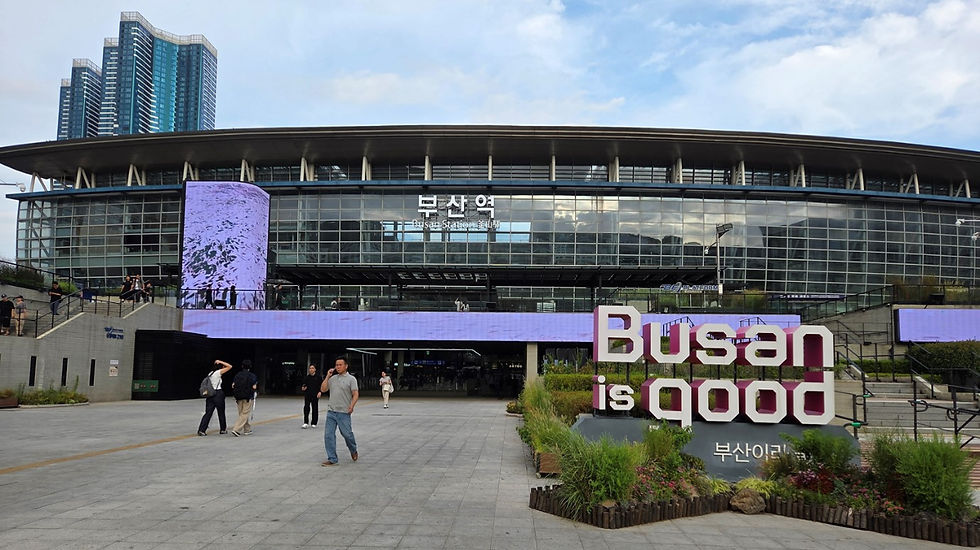
Busan Is Good, met year after year — by now the brainwashing may be taking.
That UI/UX matters in games is said until the words wear thin: the same function makes for a different experience depending on how it is shown and used. This year’s BIC made many improvements on exactly that score, and I want to note a few changes that satisfied.
First, the overall lighting was dimmed. A hall with crowds streaming through is, inevitably, a harder place to concentrate on a game than one’s home — and in past years the excessively bright lighting sometimes made it genuinely uncomfortable to look at the monitors. The switch to darker lighting cut that discomfort markedly. The easier it became to concentrate, the more games I could try.

A game show, after all, tastes best a little dark.
Next, I liked that the conference was moved inside the hall. Previously it ran in a separate space, so the time it took to get there always had to be weighed; this time it ran along one side of the hall, and the sense of distance shrank decisively. Thanks to that, you could go listen to a session that interested you and head straight back to the games when it ended. A convenient change for visitors — but for the developers who are the conference’s main audience, surely a more welcome one still. Even within the same building, moving a body and mind worn out from running a booth to another space is harder than it looks. If the conference grows, the format may become hard to keep — but personally I hope it continues in just this small, dense form.

Holding the hall and the conference in one space was a considerable advantage.
Last, the display of each game’s development stage at its booth was quite useful. The panels, sorted into four classes — Released, Coming Soon, Beta, Demo — were a small but real help in sizing up a game. To enjoy unreleased games is to live, again and again, with not knowing how long a game you like will take to ship. Being able to see at a glance what stage a game is at is therefore welcome indeed. Not only does it spare the needless exchange of “when does this come out?” — “it’s already out”; depending on a player’s inclination, one can filter out the already-released games, or seek them out on purpose.

Fair to call it a UI improvement, no?
The line between Beta and Demo was somewhat blurry, though — presumably because teams use the two words by different standards. This is fairly common in games; even Released carries the confusion of whether it means early access or full release. Perhaps it would have been clearer to place Demo above Beta, dividing the games into those with a demo playable outside BIC and those without.
Midsummer, and Busan.
Apart from the improved experience inside the hall, the conditions outside it still left something wanting. First: it is too hot. Indoors the air conditioning keeps things cool, but step outside and the story changes. When the temperature dips a little it turns humid, and at times the rain pours down. One might call it perfect weather for the beach — but this weather’s greatest problem is that it affects the gatherings after the event.

Scorching, then pouring. Summer is not easy.
Part of an indie event’s charm lies beyond the exhibition proper. I once named, as my greatest regret about Taiwan’s indie event G-Eight, the absence of after-hours community gatherings. After the show closes — beyond the official drinks — there is the time when developers cluster in threes and fives to talk games. At BitSummit, on Friday, Saturday, and Sunday nights, everyone gathers on the banks of the Kamo River to talk about everything under the sun. BIC, I suspect, hopes such gatherings will form of their own accord — but Haeundae in midsummer is not an easy place to linger long in conversation. A spot on the shoreline is designated, but finding where that spot is proves more confusing than you would think.
At BitSummit, held in July, the heat was a serious problem too — hence the riverbank, at least somewhat cooler and good for gathering to talk. Even so, BitSummit moved back to May from this year; having known only July in Kyoto, one taste of May makes you hope it never returns to July. That is how much weather shapes the experience of an event. BIC, after years of effort, does draw a crowd — but I wonder whether August’s heat is not an obstacle to that gathering lasting longer, and growing larger.
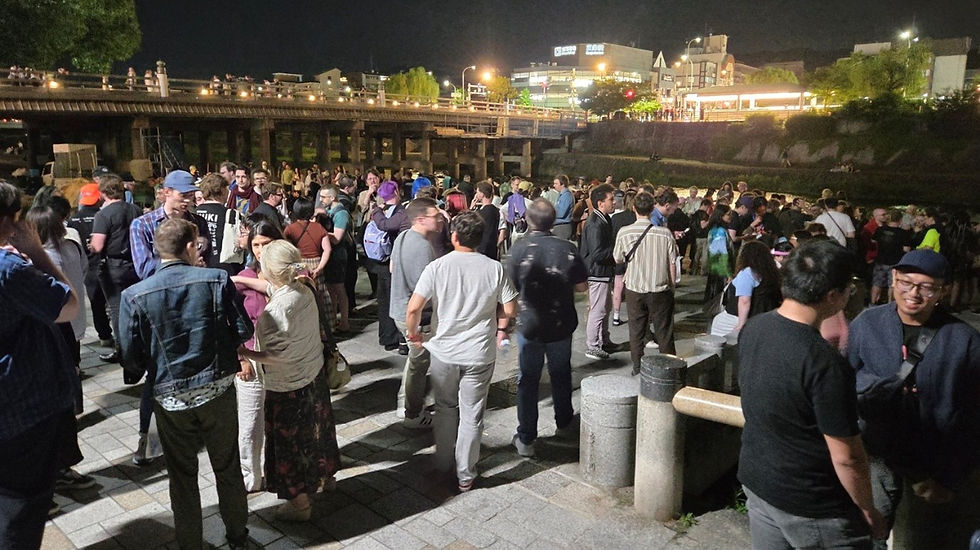
This year’s BitSummit drew a great many developers. Might the weather have played its part?
Lodging and transport cannot be left out either. Summer Haeundae overlapping with the Liberation Day holiday — cheap lodging is not to be hoped for. Fortunately, exhibiting teams are largely spared this burden by BIC’s lodging support. But visitors coming to see the show must shoulder it whole. Even if you solve it somehow by lodging outside Haeundae, on Busan’s outskirts, next comes the matter of transport. The Seoul–Busan KTX, which sells out fast at the best of times, naturally grows harder to book in peak summer.
The visitor, in the end, must clear the two hurdles of transport and lodging — no easy thing for someone whose main purpose is BIC. I made “well, I’ll do some Busan sightseeing while I’m at it” my personal answer and enjoyed myself well enough — but sightseeing is the visitor’s choice, not an answer everyone can adopt to justify the burden of attending.
Personally, the crowd I sensed on site felt smaller than the announced figures. But tallying methods differ by event, and how busy a floor feels is no gauge of actual attendance. The summer-holiday timing is an obstacle for some and may have been an opportunity for others — so I do not want to pronounce on the success or failure of the schedule itself. Still, that the burden of travel and lodging is considerable for those who would come for BIC’s own sake remains a regret.

Not that people were few — Saturday was properly bustling.
BIC and Indie
What makes BIC welcome despite these difficulties is that games one would never otherwise meet can be met here. BIC in particular pours considerable effort into inviting overseas indie teams, and this gives it a special charm.
This year brought many chances to talk with teams from abroad. The French developers left a deep impression: the everydayness of diversity I could experience in their games, their way of looking at it, the elements their works borrowed — these were things I had not been used to meeting. It is a little different from mere novelty at unfamiliar material. It was the experience of meeting, through games, what a person raised in a given environment finds natural, what they attend to, what stories they want to tell.
This is probably not an experience travel can give. Visiting a place is one thing; meeting a work made, through their own eyes, by someone who has lived there is another. Perhaps it is closer to trying on their lives. They projected part of their lives whole into the work, and I, playing it, could look inside for a while.
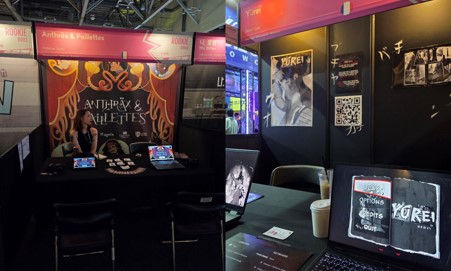
One can carry the everyday of queer culture into narrative — or carry a hobby of reading Japanese manga into a game.
The Japanese game Rain98 was like that too. The handsome graphics and beautiful characters are certainly strengths, but what stayed with me was the story unfolding in its gloomy, dejected atmosphere. It borrows 1998 as its setting, but what it wants to say through that may well be a story of today. The way atmosphere and story combined to deliver a nihilistic feeling hard to put into words was tremendously attractive.
Planner Simulator, by a Chinese developer, was the exact opposite of the examples above — a game enjoyable because I could sympathize with it all too strongly. It delivered something close to PTSD: the protagonist’s mother said things so exactly like my own family’s that I felt a sudden, strong inner kinship with a developer I was meeting for the first time. They must have labored hard to pour their own experience into the game.

Lines that might give someone PTSD.
Perhaps straining to tell a special story just because one makes indie games is, if anything, what harms that diversity. Drawing out what one has thought on the ground of one’s own life and experience may yield the most original result of all. In that light — is it not the familiar environment called Korea that makes us perceive our own games as less original? If overseas games feel new, it may be because their everyday experience differs from ours.
Of course, the difference cannot be explained by familiarity alone. What a creator can call to mind and express naturally is not unrelated to the environment they have lived in. What one meets in daily life, how used one is to showing one’s tastes and thoughts, which differences one feels as strange — all of it will tell on the work. Which is why the diversity experienced at a gathering of Korean games alone and at a gathering of games from across the world cannot but differ.
That is why the effort BIC puts into attracting overseas teams feels important. Developers and gamers who can rarely attend events abroad can, here, meet games made in other environments and talk with the people who made them. Bringing in many overseas games is not merely a matter of raising the exhibit count. It is a widening of the chances to meet different lives and different thoughts.
And this is not a relation in which we only learn. The experiences and sensations familiar to us may be, for someone else, a world met for the first time. As we experience other lives through their games, we can give them ours. A story familiar to us becomes someone’s new world, and a game made somewhere wholly different calls up unexpected sympathy. In making such meetings possible, the experience BIC offers is special indeed.
I hope these meetings continue. For that, the games that ground them must also keep being made, and keep reaching people. Completing one’s experience and thought as a game costs time and money — and completion does not mean discovery follows of itself. The player, too, must spend time launching a game they do not yet know is fun, learning its rules, dwelling inside it. Maker and future lover of the game alike need the chance to discover each other.
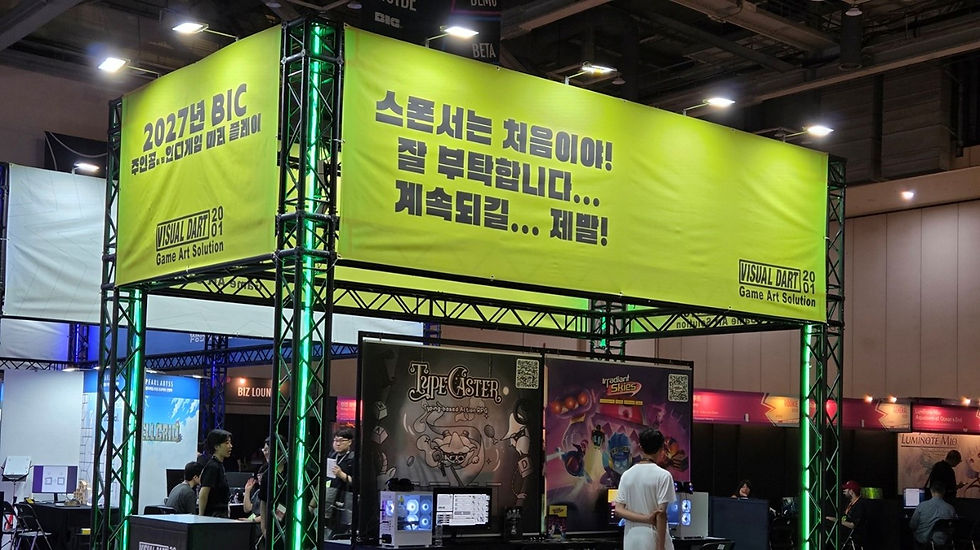
Everyone has a first meeting.
BIC, I think, is a place for that meeting. It eases participants’ lodging burden, sets the games before visitors, and arranges the chance for developers and players to talk face to face. An event cannot guarantee a developer’s success or livelihood — but providing the chance to meet the people who will love one’s game is concrete help, without question. For visitors, it is the chance to play games they would never have known existed, and to meet the stories inside them.
Dreams do not put food on the table. But what developers want is, in the end, a future in which that dream does. To make the game one wants to make, to meet the people who love it, and to get by well enough to make the next one. My cheering for BIC comes from wishing for that future. I want different games by different people to keep on coming — then there will be a little more to play, unfamiliar kinds of fun to meet, and a wider world to come to know through games.
In Closing.
The BIC of August 2026 was a handsome, enjoyable game event. Listening to the conference and concentrating on games both came easier than before, and the experience of meeting other lives through the works of overseas teams was a pleasure. At the same time, I wish it were easier for more people to come — and that those who met with such difficulty could carry their conversations on a little more comfortably after the event ends.
To call it a good event and to say regrets remain is no contradiction. Rather, it is because I gained so much here that the wish for it to grow better runs strong. Cheering on BIC, and the world’s many indie teams Korea will meet through it, I close.
Tags:
"BIC", "부산인디커넥트", "인디게임 페스티벌", "인디 게임", "게임 행사", "비트서밋", "부산", "인디게임 개발자", "Busan Indie Connect", "Indie Games", "BitSummit", "Indie Game Festival"
글이 맘에 드셨다면 공유해보세요.

A former science student, former economics major, and current game designer—who can't tell whether a love of well-rounded "hexagon" characters is why life turned out balanced, or whether life turning out that way is why the hexagon characters appeal. Lives a life of enjoying, and now and then learning.
