
The Legend of Zelda Series: The Franchise and the Evolution of Its Direction (1)
32
GG Vol.
26. 10. 10.
On February 21, 1986, The Legend of Zelda was released on Nintendo’s Famicom system — forty years ago this year. Over that long span, the Legend of Zelda series has refined the history and the staging of the whole franchise across more than twenty games. Looking to recent entries: with Breath of the Wild it presented an open-world mode of direction that gathers up the entire series; with Tears of the Kingdom, through the appearance of the Zonai, it set a direction for exploring a new history reaching back to the ancient kingdom of Hyrule. And in Echoes of Wisdom, casting Zelda as protagonist in place of Link — the series’ playable character for nearly its whole run — it brought reform to the series around its first female director, Tomomi Sano.
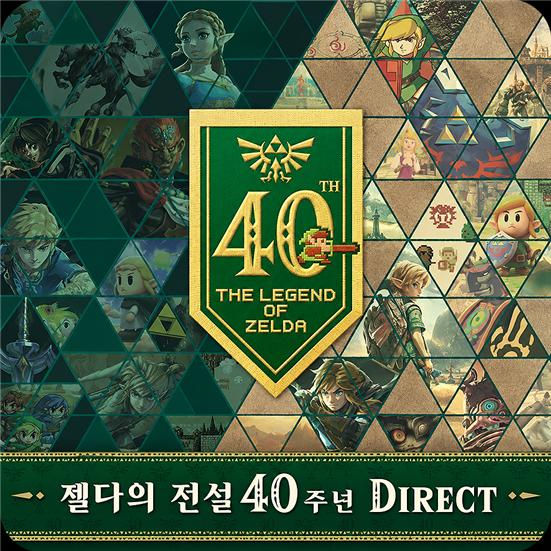
The fortieth anniversary of the Legend of Zelda franchise
This essay, marking the series’ fortieth anniversary, will discuss the transformation of the franchise and its direction. Nintendo plans to release a remake of Ocarina of Time this November to mark the anniversary. Ocarina of Time is, with Breath of the Wild, among the most acclaimed works across the series — and the point at which the whole Zelda world-setting splits into three distinct timelines, which makes it crucial to understanding the series entire. The process of that split is relatively well known to fans; yet in fact it was not planned from the first game onward. Rather, the Zelda series took the strategy of raising the franchise’s overall completeness by little by little annotating Link’s repeating hero-tale with symbolism and plausibility as the early works took shape.
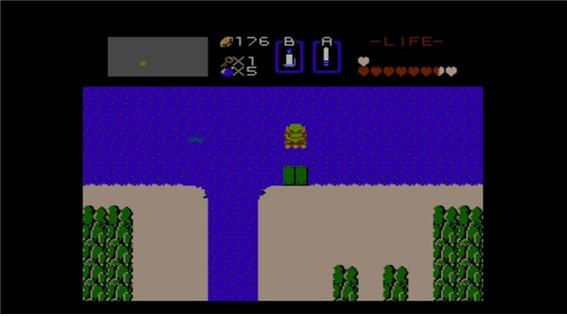
The first The Legend of Zelda, with Shigeru Miyamoto as producer and director
Shigeru Miyamoto, who first directed the game, conceived the opening entry as a light action-adventure grounded in the adventures of his boyhood — watching shadows flicker inside a cave — but as it and its successors won their popularity, the Zelda series grew into one of Nintendo’s defining franchises alongside Mario. In this process, the director’s role — charged with the staging of the series’ content — passed from Nintendo’s legend Shigeru Miyamoto to a range of figures: Takashi Tezuka, Eiji Aonuma, Hidemaro Fujibayashi, and more. Indeed, counting those who directed only one or two entries — like Tomomi Sano, director of the most recent Echoes of Wisdom — the genealogy grows more complicated still. The twenty titles released so far, with producer and director in order of release, are as follows.
Table: Producers and directors of the Legend of Zelda series
No. | Title | Release | Platform | Producer | Director |
1 | The Legend of Zelda | 1986.02.21 | FDS | Shigeru Miyamoto | Shigeru Miyamoto, Takashi Tezuka |
2 | Zelda II: The Adventure of Link | 1987.01.14 | FDS | Shigeru Miyamoto | Tadashi Sugiyama |
3 | A Link to the Past | 1991.11.21 | SFC | Shigeru Miyamoto | Takashi Tezuka |
4 | Link’s Awakening | 1993.06.06 | GB | Shigeru Miyamoto | Takashi Tezuka |
5 | Ocarina of Time | 1998.11.21 | N64 | Shigeru Miyamoto | Eiji Aonuma, Yoshiaki Koizumi, Toru Osawa, Yoichi Yamada |
6 | Majora’s Mask | 2000.04.27 | N64 | Shigeru Miyamoto | Eiji Aonuma, Yoshiaki Koizumi, |
7 | Oracle of Seasons / Oracle of Ages | 2001.02.27 | GBC | Noritaka Funamizu | Hidemaro Fujibayashi |
8 | The Wind Waker | 2002.12.13 | GC | Shigeru Miyamoto, Takashi Tezuka | Eiji Aonuma |
9 | Four Swords | 2003.03.14 | GBA | Noritaka Funamizu, Yoshihiro Sudo | Hidemaro Fujibayashi |
10 | Four Swords Adventures | 2004.03.18 | GC | Shigeru Miyamoto, Eiji Aonuma | Toshiaki Suzuki |
11 | The Minish Cap | 2004.11.04. | GBA | Keiji Inafune | Hidemaro Fujibayashi |
12 | Twilight Princess | 2006.12.02. | GC, Wii | Eiji Aonuma | Eiji Aonuma |
13 | Phantom Hourglass | 2007.06.23. | DS | Eiji Aonuma | Daiki Iwamoto |
14 | Spirit Tracks | 2009.12.23 | DS | Eiji Aonuma | Daiki Iwamoto |
15 | Skyward Sword | 2011.11.23 | Wii | Eiji Aonuma | Hidemaro Fujibayashi |
16 | A Link Between Worlds | 2013.12.26 | 3DS | Eiji Aonuma | Hiromasa Shikata |
17 | Tri Force Heroes | 2015.10.22 | 3DS | Eiji Aonuma | Hiromasa Shikata |
18 | Breath of the Wild | 2017.03.03 | Wii U, NS | Eiji Aonuma | Hidemaro Fujibayashi |
19 | Tears of the Kingdom | 2023.05.12 | NS | Eiji Aonuma | Hidemaro Fujibayashi |
20 | Echoes of Wisdom | 2024.09.26 | NS | Eiji Aonuma | Tomomi Sano, Satoshi Terada |
The Legend of Zelda series has often worked with outside companies — collaborating with other Japanese studios on games, spin-offs, ports, and remakes. Look at the producers of the Capcom collaborations — the Oracle games, Four Swords, The Minish Cap — and you find Noritaka Funamizu, designer and producer of Street Fighter II and Monster Hunter, and Keiji Inafune, the legendary developer of the Mega Man series. Hidemaro Fujibayashi, director of those three, staged them while employed at Capcom — but Nintendo’s management, watching their success closely, recruited him; he would go on to direct every main entry gracing the series’ later run: Skyward Sword, Breath of the Wild, Tears of the Kingdom.
Viewed across the whole series, the genealogy of producers and directors divides broadly into four generations: Shigeru Miyamoto, Takashi Tezuka, Eiji Aonuma, Hidemaro Fujibayashi. Nintendo, stewarding the Zelda franchise across forty years, has continuously cultivated its corps of producers and directors. Among them are cases like Yoshiaki Koizumi — who joined Ocarina of Time and Majora’s Mask as a director, active across dungeon design and 3D modeling, then moved his stage to the Mario series, raised another franchise, and became one of Nintendo’s marquee stars — and cases like Daiki Iwamoto, who designed the stylus controls fitted to handhelds like the Nintendo DS in Phantom Hourglass and Spirit Tracks, and later took charge of the sky fields in Skyward Sword.

A Link to the Past, directed by Takashi Tezuka
The four figures of this central genealogy each contributed differently. If Shigeru Miyamoto first gave body to the world of his boyhood adventures — first implementing adventure in the Legend of Zelda series — then Takashi Tezuka, Miyamoto’s long partner and a major contributor to the Super Mario series as well, directed the third entry, A Link to the Past, drawing the fullest performance from the Super Famicom, the new console after the Famicom, to create and expand the world inside Zelda and to systematize it to the grammar of the action-adventure game. It is no exaggeration to say the early series’ mechanics and puzzle gimmicks were designed in the collaboration of Miyamoto and Tezuka. Miyamoto himself, though, seems not to have thought much at first of raising The Legend of Zelda into a single great franchise.
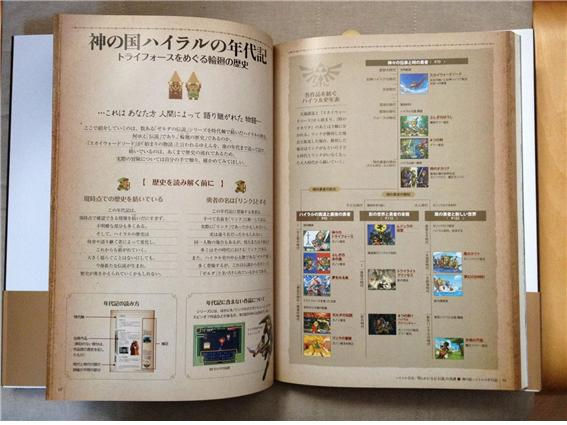
The series’ world-setting and time axes as shown in the Japanese edition of Hyrule Historia
Eiji Aonuma, a director from Ocarina of Time onward, contributed greatly to the staging of individual works — but his larger role was in trimming and ordering the history so the Zelda series could become a franchise with continuity. In truth, the works before Ocarina of Time amounted to a hero-tale of repeating pattern: countless Links and Zeldas appearing to defeat Ganon. Hence, from the second entry, Zelda II: The Adventure of Link, the setting was introduced that the princess of Hyrule is always given the name Zelda; Impa, discovering the mark of the Triforce of Courage on Link’s hand, leads him to the chamber in Hyrule Castle where the first Zelda sleeps. The mention of a “first Zelda” implies that the story of Link rescuing Zelda will return again and again.
As Vladimir Propp observed in Morphology of the Folktale, the characters change but the functions repeat. The era differs, the Link differs, the Zelda differs, Hyrule’s face differs — yet the Link–Zelda–Ganon relation, and the heroic functions performed within it, are reproduced over and over. As the series extended into a long-running franchise, this repeating structure gradually began to be arranged within a single historical order. In particular, Hyrule Historia (ハイラル・ヒストリア ゼルダの伝説 大全), published in 2011 alongside Skyward Sword, can be seen as the document that set in earnest the attempt to order into one continuous history the period settings and events presented piecemeal within individual works[1].
The branching of the world-setting and the time axes that Aonuma led in ordering were built less on the premise of a chronology complete from the start than as a franchise-level work of historicization: connecting and rearranging, after the fact, the relations of works that already existed. Hyrule Historia did not so much create these events anew as reconstruct the history of the Zelda world by placing settings made in different periods within one time axis, and supplementing the causal relations between work and work. Aonuma’s role, then, is to be found not in having designed Zelda’s history from the beginning, but in having organized the accumulated legends and events of the franchise into a single historical structure.

The branching world-setting and time axes of the Legend of Zelda series
In this book, published for the series’ twenty-fifth anniversary, Aonuma re-established the parallel worlds of the Zelda series: beginning from Skyward Sword and splitting into three branches at the pivot of Ocarina of Time. As the right-hand page of the photograph below shows, Skyward Sword, The Minish Cap, Four Swords, and Ocarina of Time belong to the story before the parallel split. Then come the three branches: the first, following the story in which the Hero of Time is defeated; the second, in which the Hero of Time wins but Hyrule falls, depicting adventures centuries later; and the third, in which the Hero of Time does not appear. In the ending of Ocarina of Time, Zelda sends Link — who has saved her — back to his childhood; this is the seed from which the timeline without the Hero of Time was made.
The branching and the time axes Aonuma made were not, from the start, erected under a rigorous master plan. They are better seen as the franchise’s attempt at reconstruction: weaving, as far as possible, causality and plausibility between individual works after each was created. The Triforce symbolizing the world’s several powers, and the repeating structure in which many Zeldas appear, are of course settings confirmable in early Zelda. What Aonuma did was to place between these works the historical events that would fill their gaps — the founding of Hyrule, the unification war, the Imprisoning War — and so narrow the seams of the Zelda world.
Look closely, though, and the chronology above omits the games released after Skyward Sword: A Link Between Worlds, Tri Force Heroes, and Breath of the Wild, Tears of the Kingdom, Echoes of Wisdom. A Link Between Worlds and Tri Force Heroes are stories placed after Link’s Awakening in the first branch, where the Hero of Time is defeated. The problem is Breath of the Wild and Tears of the Kingdom. The two works, without being clearly assigned to any one of the three existing time axes, present a Hyrule of a far more distant era as a new historical stratum[2]. And here the work of Hidemaro Fujibayashi begins. Fujibayashi had directed the Oracle games, Four Swords, and The Minish Cap when Nintendo collaborated with Capcom on handheld Zelda — the case of a recruit whom Nintendo’s management, taking note, brought in-house; he then directed Skyward Sword, with Eiji Aonuma producing, his first Zelda directorship after joining. Since Fujibayashi had carried out this work of historicization together with Aonuma, he was the fittest figure to direct Breath of the Wild — the work that integrated all these histories at once and showed what came after.
Breath of the Wild draws out, from the many peoples the series had accumulated, the Zora, Gorons, Rito, and Gerudo, assigns each a Divine Beast, adds to this the stories of each people’s Champion — and so realizes once more the Zelda world Takashi Tezuka had completed in A Link to the Past. What is interesting is that among the important conditions for reaching the true ending of Breath of the Wild is the recovery of Link’s memory. In the game, thirteen memories in all[3] must be recovered, and these memories play two important roles. One: for the old player who has long played the series, they call its history back to mind. The other: they see to it that new users who know nothing of the series’ long history can play Breath of the Wild without strain, with no prior information at all.

A scene of memory from Breath of the Wild
The thirteen memories chiefly depict Link, Zelda, and the four Champions preparing, a hundred years earlier, for the revival of Calamity Ganon. The kingdom of Hyrule then sought to resist Ganon by reviving the four Divine Beasts and the Guardians — but Calamity Ganon instead seized these weapons and brought the kingdom to ruin. Each of the four Champions fell to the monsters Ganon sent, inside the Divine Beast each had charge of, and Link too took a mortal wound protecting Zelda. At that moment — as she moved to shield the collapsing Link — Zelda awakened the sealing power latent within her, and had Link carried to the Shrine of Resurrection to be healed. Zelda herself remained in Hyrule Castle, holding Calamity Ganon’s power in check, enduring a hundred years.
The actual story the player experiences in Breath of the Wild begins as Link, laid in the Shrine of Resurrection, opens his eyes after that hundred years. But Link has lost all memory of the past, and so must learn again who he is, who Zelda and the Champions are, what befell the kingdom of Hyrule. Along the way the player meets a mysterious old man on the Great Plateau and learns the game’s basic grammar — then learns that he is Rhoam, last king of the fallen kingdom. Rhoam tells Link the full story of the Great Calamity of a hundred years past, and that Zelda even now holds Calamity Ganon in check at Hyrule Castle, and hands him the paraglider that lets him leave the Great Plateau. Thereafter, through Impa of Kakariko Village and the stories bound to the Champions of the four regions, Link — and the player — gradually recall Hyrule’s defeat a hundred years ago, and the present task to be carried out.
This process of recovering memory, as Fujibayashi staged it in Breath of the Wild, amounts, for the new player, to learning Hyrule’s history as the fruit of exploring its spaces rather than being force-fed exposition. For the old player who already carries the franchise’s memory, it gives the joy of rediscovering a world they remember before Link does. Amnesia in Breath of the Wild is, in effect, a narrative reset device for receiving new players and old at once. The recovery of memory is thus no mere delivery of backstory. It is Breath of the Wild’s core way of organizing history — handling at once the old Zelda’s tangled past and the new player’s ignorance, while making the past something experienced not as a chronology but as memory left in places.
This change shows that the Legend of Zelda series is not a franchise that has simply repeated the same story for forty years. The basic structure of the hero-tale — Link saves an imperiled Hyrule and, with Zelda, faces Ganon’s threat — has repeated continuously. But the way that repetition is organized and presented to the player has changed with each generation. In the early works, the repetition was a loose mythic frame that let each game stand. Even as different Links and Zeldas appeared in different eras, players could receive their relations and roles as familiar. To borrow Propp’s terms: it was the sameness of the functions performed, more than the individual identity of the characters, that sustained the franchise’s continuity.
What Shigeru Miyamoto realized in the first The Legend of Zelda was above all the sense of adventure: entering strange space, finding one’s own way, acquiring new tools that make possible what was impossible before. Takashi Tezuka, centering on A Link to the Past, extended that sense into the more concrete structure of a world in which villages, castle, dungeons, peoples, and the worlds of light and dark stand in relation. By the generation of Eiji Aonuma, the many adventures and worlds accumulated piecemeal no longer remain loose legends but are arranged as distinct eras and events. The time axes that branched after Ocarina of Time, and the chronology of Hyrule Historia, were the work of setting these works in relation within one franchise history.
But as the works multiply, this work of historicization meets a further problem. With some twenty games producing each its own era and Hyrule, its own Link and Zelda, the franchise’s history can become, for a player who has not mastered the whole chronology and its settings, a barrier to entry. The three timelines made after Ocarina of Time were useful for explaining relations among existing works, but the more precisely one tried to seat a new work in any one branch, the more constraints of setting they generated. Indeed, Breath of the Wild and Tears of the Kingdom, rather than being explicitly assigned to any of the three, keep a certain distance from the old chronology by newly presenting a Hyrule of a far more distant age.
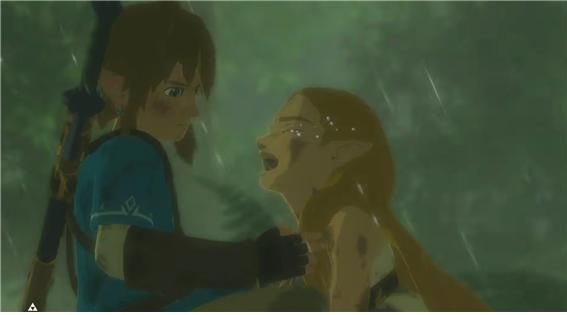
A scene of memory from Breath of the Wild
On this point, the device of “memory” Hidemaro Fujibayashi chose in Breath of the Wild matters. If the chronology of the Aonuma era arranged different works within temporal causality, Breath of the Wild converts that history into what remains in present space: ruins, place-names, wreckage, and the memories of persons. Instead of receiving what happened in the past in chronological order, the player roams the present Hyrule and discovers the traces of the past. Link’s personal amnesia justifies this structure within the game — and at the same time becomes the device that sets the player steeped in the franchise’s long history and the player meeting Zelda for the first time on the same starting line. The new player learns Hyrule’s history for the first time alongside Link; the old player recognizes the Zelda world they already knew before the amnesiac Link does.
Seen this way, the forty years of the Zelda series can be summed up as a movement of center: from adventure to world, from world to history, from history to memory. These changes did not, of course, come by discarding what preceded. In Breath of the Wild the exploration and discovery of the first game persist; the division of peoples and regions systematized in A Link to the Past lives on; the long franchise history built in the Aonuma era remains in traces throughout. What matters is that each new generation of directors has rearranged, rather than removed, what the previous generation made. The Legend of Zelda series has endured as a long-running franchise by repeating the same heroic myth while ceaselessly changing the form in which that repetition is experienced.
Tears of the Kingdom, moreover, transforms this structure of memory once again. If Breath of the Wild was the work that restored the failure of a hundred years past as Link’s personal memory, Tears of the Kingdom juxtaposes the events of Hyrule’s far-off founding era with the present world: Fujibayashi’s method, which set out from personal memory, extends again into the reconstruction of ancient history. Echoes of Wisdom, by contrast, converts Zelda — so long the object of rescue — into the subject the player directly plays. Viewed through Propp’s functions, this is an attempt to transform the very role-relation of Link and Zelda repeated across forty years. The recent changes in Zelda thus extend beyond a change of game form — open-worldization — to the question of how the myth, the history, and the roles of persons the franchise has accumulated are to be arranged anew.
But what we have surveyed so far is, to the last, the macroscopic change of the Zelda franchise. Within the same franchise, each work produced an entirely different mode of direction according to its hardware, its director, and the game-design environment of its day. This essay does not end with this issue but continues into the next. There, stepping one level down from this macroscopic franchise history, I will compare the staging of individual works — centering on game mechanics and puzzles, the relation of field and dungeon, camera and viewpoint, the organization of time and space, and the changes in interface wrought by each era’s hardware. Through this we will be able to confirm more concretely why The Legend of Zelda, repeating the same hero-tale, could be experienced each time as a new game.
[1] 青沼英二 責任編集, 任天堂株式会社 監修, 『ハイラル・ヒストリア ゼルダの伝説 大全』, 小学館, 2011.
[2]According to the Zelda portal Nintendo itself operates, the most recent work, Echoes of Wisdom, belongs to the Fallen Hero timeline — after Tri Force Heroes and before the first The Legend of Zelda. https://www.nintendo.com/jp/character/zelda/en/history/index.html
[3] In the game, after recovering the twelve memories tied to particular places, visiting Impa in Kakariko Village reveals the final location, and the thirteenth memory is recovered.
Tags:
젤다의 전설, 야생의 숨결, 시간의 오카리나, 하이랄 히스토리아, 미야모토 시게루, 아오누마 에이지, 후지바야시 히데마로, 게임 프랜차이즈, The Legend of Zelda, Breath of the Wild, Nintendo, Video Game History
글이 맘에 드셨다면 공유해보세요.

Professor in the Department of Culture & Contents at Soonchunhyang University. Researches game storytelling and game design as central concerns, and led the founding of the Busan Indie Connect Festival—a leading indie game festival—where serves as head of the jury. Also a juror for the Independent Games Festival (IGF), one of the most prestigious indie game events internationally. Books include Digital Storytelling (co-authored, 2003), Digital Games: A New Territory of Imagination (2005), Indie Games (2015), Stories Become Transformers (co-authored, 2015), Mario, Born in '81 (co-authored, 2017), The Theory of Games (co-authored, 2019), and Games Are Games: Game × Ecosystem (co-authored, 2021).
