
The Journal in the Game: Memory That Substitutes, Supplements, and Governs
31
GG Vol.
26. 8. 10.
Why Was I Standing in These Ruins?
A semester of teaching, stormy as ever, has ended. The busier the term, the less time goes to research; it is a sad fact that the things one loves most are the first pushed aside. Through the regular semester and the summer session, I never once launched a game. I felt sorry toward my character and companions. And so, after half a year, I started Baldur’s Gate 3.
“Why was I standing in these ruins?”
And I realized I did not know who I was. More precisely: I did not know why my character on the monitor was standing in a ruined town.

* An illustration of the ruins of Reithwin, the stage of Act Two of Baldur’s Gate 3
It is not cognitive impairment. Surely not. I have, after all, been going through the same thing for years. Gamers who love role-playing games that realize vast quests, narratives, and worlds go through it often enough. In the sprawling world of a game — where have I been and where have I not; of the countless quests, which are solved and which still in progress; what was I about to do next; how was I planning to build my character; how had I been getting on with my companions; and what on earth did I mean to do with the junk filling my inventory? I stare blankly at the screen like someone just awakened, memory gone, in the middle of ruins. The empty gaze stops at the upper right of the screen.
“Journal [J]”
Without hesitation, but without much expectation either, I press J. The journal. The log. The quest log, and so on. Games built around quests and unfolding stories all include a journal. In it, the adventure I have forgotten is neatly arranged: whom I met in which village, what I was told, which requests I accepted. And what I am now supposed to do.

* The quest journal of Baldur’s Gate 3
“We must deal with Raphael’s old enemy.”
It does not feel as though my memory has returned. I still do not know who exactly Raphael was, who this old enemy might be, or why I agreed to take the matter on. And yet I move my character toward the Mausoleum, as the journal directs. Because the journal says so.
Otto’s Notebook Remembered
In their paper “The Extended Mind,” the philosophers Andy Clark and David Chalmers present a figure named Otto. Because of Alzheimer’s disease, Otto cannot reliably retain new information in biological memory. So he writes what he needs in a notebook, and opens it whenever there is something he must know.
Suppose Otto needs to recall a colleague from a former workplace. Instead of summoning the colleague in his head, he checks the notebook. Clark and Chalmers’s claim is not that the notebook helps memory. It is that if the notebook’s information is stably coupled to Otto’s thought and action, it can be regarded not as an incidental tool lying outside his cognitive process but as part of that process. The human mind — the cognitive process — is not shut inside the skull. Mind spreads wider: into things, and into the body as well.
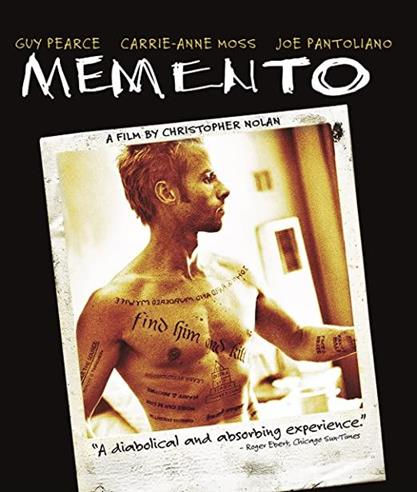
* The protagonist of the film Memento, who suffers from anterograde amnesia, uses his own body as a notebook.
The game journal is a strong candidate for the extended mind Clark and Chalmers describe. The player does not remember everything an NPC has said — nor needs to, since the log can be opened when needed. Players largely do not doubt the record that stands in for the dialogue, and on that trust they explore, meet people, collect things. Even after months away from a game, the player reorganizes their own actions through the journal: an extended memory, an extended mind.
But between Otto’s notebook and the game’s journal lies a small-seeming yet decisive difference — one Clark and Chalmers do not explicitly treat in discussing the extended mind. Authorship. The author of Otto’s notebook is Otto himself. The game’s journal is different: what is written there is what the game system has decided the player shall remember. Of course, the journal’s contents cannot wholly betray the player’s actions; the system enters what accords with what the player has done. If, without my writing a word, the system writes down for me what accords with my actions, perhaps authorship does not matter so much.
The Journal’s Memory beyond the Record
And yet authorship forms a meaningful difference. The problem arises where the journal goes beyond “recording fact” in the player’s stead, to prescribing how the player’s mind is to be maintained.
“Go to the northern woods.”
“Retrieve the escaped slave.”
“Defend the village from the goblins.”
“We must deal with Raphael’s old enemy.”
The game journal crosses a line. It orders us about. The journal’s memory is no mere record of past fact. It is, for the most part, prospective memory — closer to remembering an intention that some action is to be performed in the future. And through it, the player returning after half a year is made to carry the action forward. In this respect the heart of the journal is more than the recording of events: beyond what has happened, it reaches into intention and prospect.

* The journal of Baldur’s Gate describes, in the player’s stead, the player’s feelings and judgments.
The game journal does not stop there. It sometimes describes feelings the player never felt, or hands down judgments the player never made.
“The attempt on my life was laughable, but I fear worse threats will follow.”
The journal of Baldur’s Gate, released in 1998, speaks thus in the player’s place. The attempt on my life was deemed “laughable”; the greater threat to come aroused “fear.” The sentiment the journal has written on my behalf suits the game’s narrative perfectly.
Fair enough. Somewhere in the world there must be a player who felt exactly as the journal describes. In my case, though — no. As someone who has played Baldur’s Gate dozens of times through, I have never once felt that fear. Fear of being caught, and duly disciplined, for sneaking the game before dawn — that, perhaps.
Here is where authorship makes its meaningful difference. Otto can, of course, write prospective memories of things to do in his notebook. Things to do next week, what to say on meeting a certain person — intentions and prospects aimed at the future are entered in the form of commands. Feelings and judgments are perfectly possible too: so that a happy memory and its feeling are not lost, and so that they carry into his next action, Otto can write his feelings down. And here the “reader” of the notebook’s commands, feelings, and judgments coincides with its “author.” In that respect it remains a record of facts as contents of consciousness — and in that respect it is a piece of self-governance.
The journal’s author, by contrast, is not the player. When the game system records, in the player’s stead, what accords with the player’s actions, no problem arises. But when it begins to write out what was never in the player’s consciousness — there, at last, the difference from Otto’s notebook appears. Because it is no longer self-governance.
The Record That Substitutes, the Record That Supplements
A situation in which the record of my feelings, judgments, and intentions is not a piece of self-governance but the result of a developer supplementing, through text, what was absent from the player’s original consciousness — that is precisely the game journal. What appears at that point is the supplément — the supplement — and governance by another’s will. For at that moment the game journal ceases to be a mere external storage device. It guides and prescribes the player’s intentions, feelings, and judgments in a particular direction. In that respect the journal does not only extend the player’s mind; it governs it.
Of course, the player’s actions govern the journal in turn. Different texts are recorded according to what the player does; at first glance, the standard appears to be the player’s action. Pure reflectionists would say the journal is only ever an aid standing in for the player’s memory — something a player of perfect memory would never have needed, a shabby copy and mimesis of living consciousness. The real thing is always the player’s vivid consciousness; the journal is merely an external tool that briefly fills the vacancy when that consciousness is absent. There is an original, and its degraded version. There is living speech, and the record that took it down after the fact.
It is exactly this one-sided, hierarchical relation that Jacques Derrida took issue with. Western metaphysics long treated writing as a secondary sign of speech — a derivative appended to living presence, a dangerous surplus. Speech is close to spirit; writing is the copy that transcribes it. Derrida collapses this schema with the doubleness of a single word: the supplement. The supplement is at once an addition and a substitution. On the one hand it looks like a surplus appended to what is already full; on the other it is a substitute that fills, in its place, a lack that precedes it in the original. The two functions cannot be separated. And what this fact exposes is that the original the supplement fills was never complete to begin with. The lack was not a later accident but the condition from the start.
The game journal is exactly so. When I open my eyes in the ruins after half a year, what the journal’s record performs is not an accurate reproduction of my consciousness of six months ago. “We must deal with Raphael’s old enemy” is not a transcription of my firm resolve. No such steadfast mind ever existed. The journal produces it — and I obey. No scorn or unease over the attempt on my character’s life ever existed. The journal produces it — and I take up the narrative that follows along that emotional line. The journal is not a degraded version of the player’s consciousness; it is the supplement filling a place that was empty from the start in that original — and a governance of the player.

* The illithids, central to the narrative of Baldur’s Gate 3, can inject commands, feelings, and judgments into another being’s consciousness through mind control.
The supplement begins as an aid but ends by usurping the original’s place and standing in dominance. Since there never was a master to serve, the supplement serves no one; it becomes master itself — though it will, in turn, have to cede the throne to the supplement that succeeds it. If Otto’s notebook never turns into governance by another, it is because reader and author are both Otto: self-governance still stands in the place of the lack. But the journal that has handed the author’s seat to the game system extends the mind and, at the same time, governs the mind so extended. Extension and governance are the two faces of the single movement called the supplement.
“Why was I standing in these ruins?”
The place where the judgments, intentions, and feelings that once appeared in my consciousness of six months ago have gone missing — into that place steps the journal. I press J and head for the Mausoleum, as the journal tells me. I go there not because any memory or intention of going remains in me, but because it is written so in the journal. The player who wakes in the ruins is not a master with a tool in hand. He is one who is first constituted by the text he reads. For him there is no outside-the-journal — just as, for Leonard, the protagonist of Memento, the record was everything.
Tags:
퀘스트 로그, 발더스 게이트 3, 확장된 마음, 대리보충, 자크 데리다, RPG, 게임과 철학, Baldur's Gate 3, Extended Mind Theory, Quest Log, Jacques Derrida
글이 맘에 드셨다면 공유해보세요.

